|
Americans are often moved to produce
homemade flags in celebration of
America and the patriotism that
stirs during great events. Yet
as far as I know, only in the case
of World War II liberation from Nazi
Germany have a broad population of
non-Americans been stirred in great
numbers to produce American flags as
a demonstration of their heartfelt
appreciation and respect for the
American people. Collectively,
these flags are among the most
unique and beautiful of any genre of
American flags. Their make-do
attributes are nearly limitless. A
lack of specific knowledge about the
flag itself, a lack of time, and a
lack of suitable materials in an
utterly devastated region, combine
to result in a collection of flags
where nearly every example is unique
and rare.
Below
are some examples of World War II
liberation flags highlighting their
uniqueness, beauty and historical
significance. Many of
these flags were located and
originally acquired by friend and
long time American flag collector
Bruce Smith, for whom this important
sub-collection of the Rare Flags
Collection is named. It is the
finest collection of these important flags ever assembled.
|
|
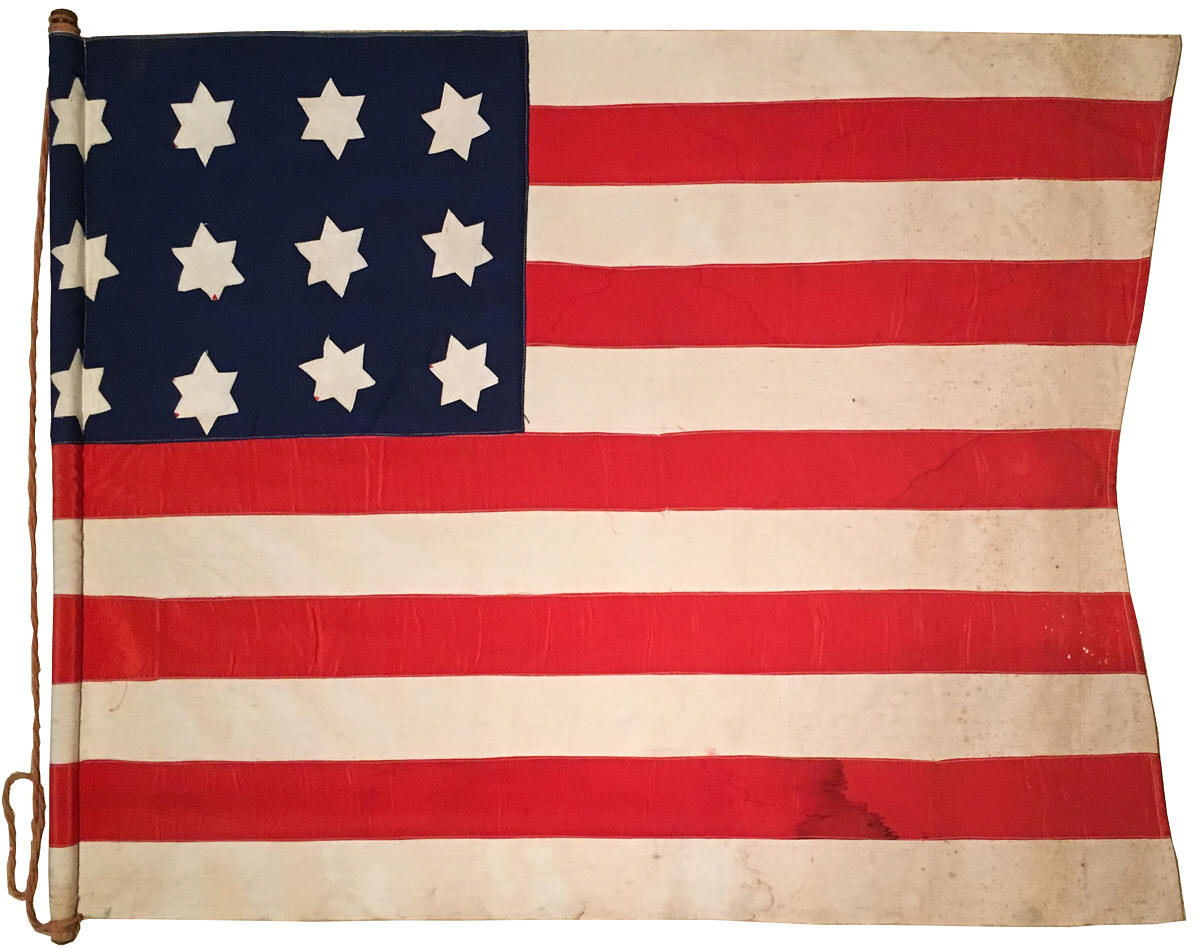 |
12 Six-Pointed Stars,
Neufchâteau,
Vosges,
France.
This beautiful liberation
flag of 12 stars and 11
stripes is visually striking
with many rare traits such
as the use of six-pointed
stars, the canton resting on
the red "blood" stripe, the use of white stripes as
the first and last stripes
of the flag, a slight
swallow-tail form, and a
banner staff and cord so the
flag could be hung
vertically. The seller of
the flag relayed this story,
from the man from which they
acquired the flag: "He
tells me that the flag comes
from the town of Neufchâteau
in the Vosges where he used
to live. [It] belonged to a
well off family in town and
during the war in 1944-45
after the liberation of the
region there was a column of
German soldiers which came
up the Rhone Valley and
passed through the town.
When the Germans saw the
liberation flags hanging
from the windows they
stopped and rounded up
everyone who had a flag and
put them in the town plaza
to shoot them but that since
the Americans were not far
they decided to run off fast
instead. I asked him about
the twelve 6 pointed stars and he told me
that since the French
weren't always sure how many
stars the American flag had
they would just use the
space they had." |
|
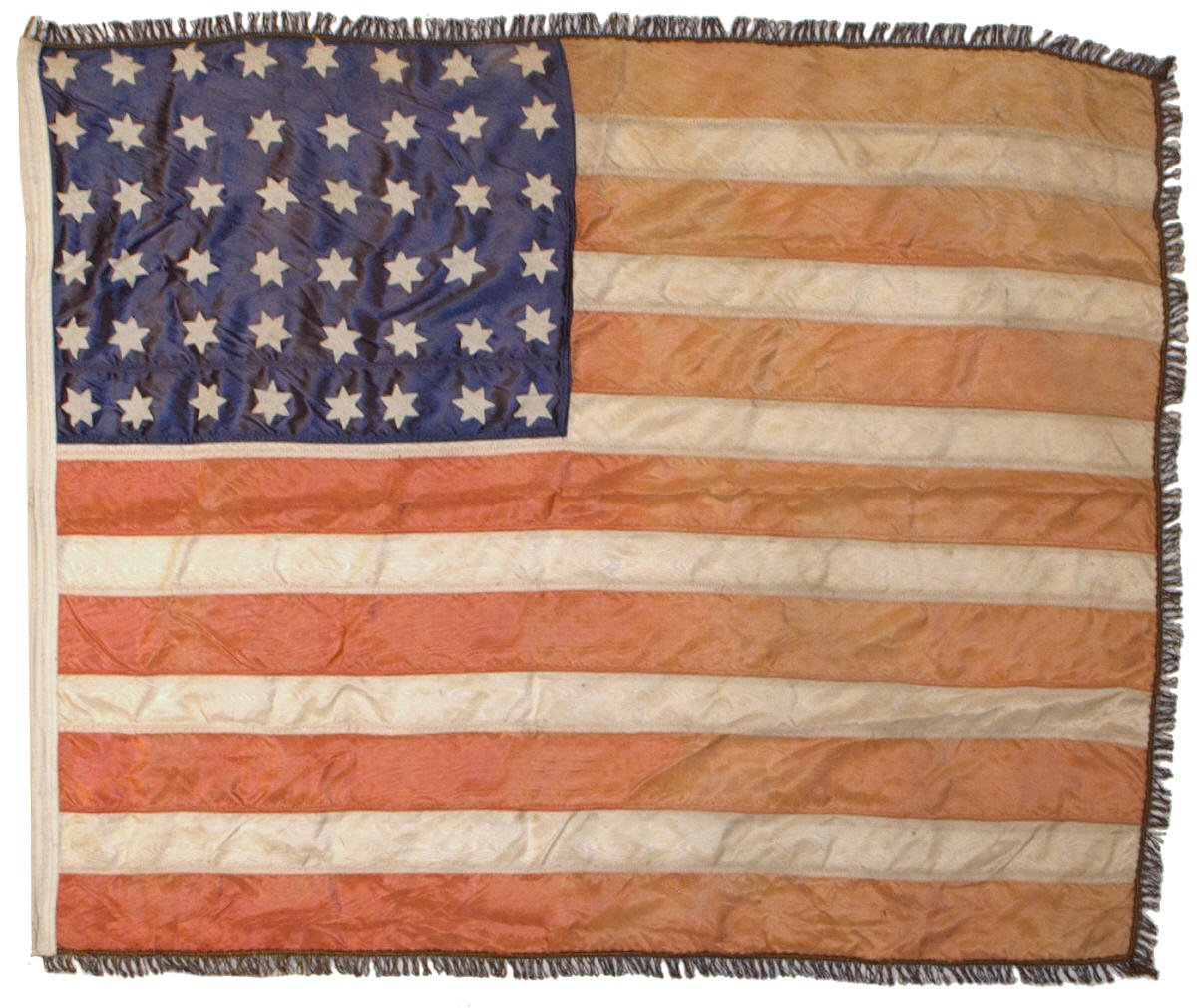 |
48 Stars, Pont Aven,
Bretagne,
France.
This flag of 48 six-pointed
stars was found in Pont Aven,
France, which is located in
Bretagne, not far from
Normandy, France. The
original owner of the flag
indicated that the flag was
inspired by the liberation
of Pont-l'Abbe in Normandy.
The canton of the flag is
made of silk, with small
six-pointed cotton stars
sewn hand sewn to the
canton. The stripes
are machine sewn and appear
to be made of either nylon
or rayon. A wiry
metallic bullion fringe
surrounds the flag, and is
likely repurposed upholstery
or curtain trim. The
flag has a sleeve hoist and
the canton is inset into the
third white stripe, nearly
resting on the red "blood"
stripe. American flags
with stars having other than
five points are very rare. |
|
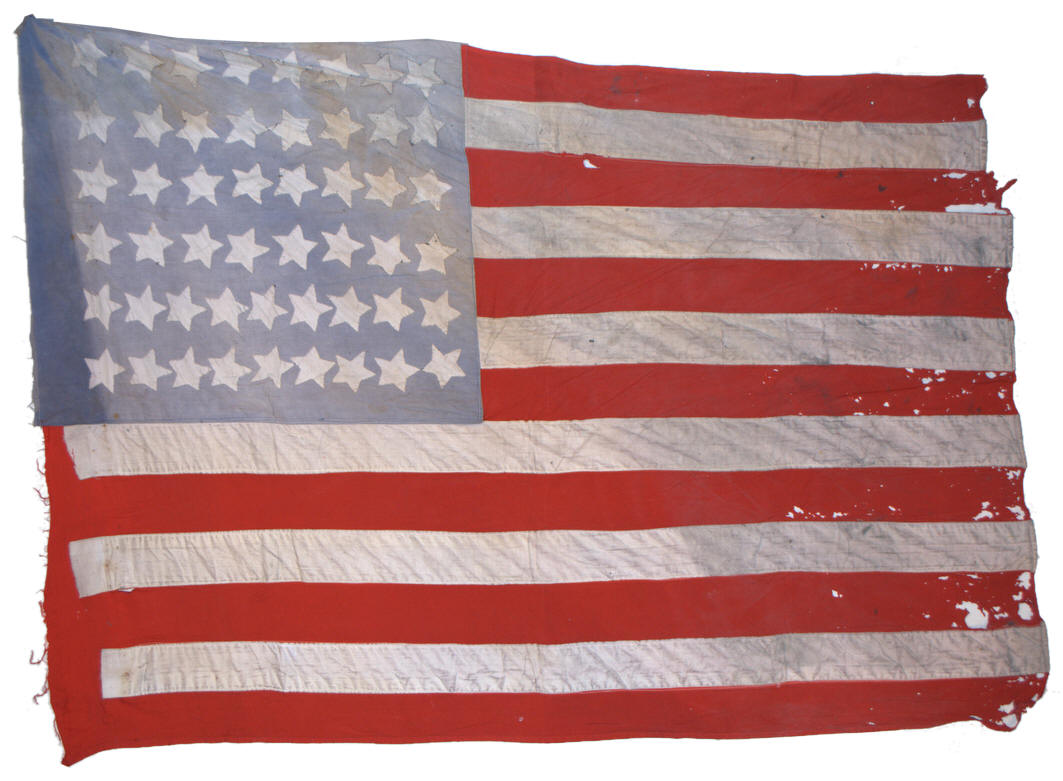 |
48 Stars, Sarralbe,
France.
The women who made this flag
did so at the risk of their
own lives. The story
of this wonderful flag is
best told in the words of
the Frenchman who discovered
it in France in 2010:
"Hello I found the flag
in the attic office in an
old factory, when i've bough
this. I went to see a very
old lady who worked in these
offices at the war. she told
me that the women have sewn
about 10 desktop flags when
she heard spoken of the D
day. Factory and offices was
occupied by Nazi and had to
use a lot of cunning to
avoid being catch. This
offenses were punishable by
death. She had sewn into the
attic on a sewing machine
peugeot 1880's which is very
rare that I possess again.
They were made to Sarralbe
town." The flag is
one of the few I am aware of
constructed of white stripes
sewn onto a red field to
produce the stripes.
Allied armies liberated
Sarralbe, France in the
first week of December,
1944.
|
|
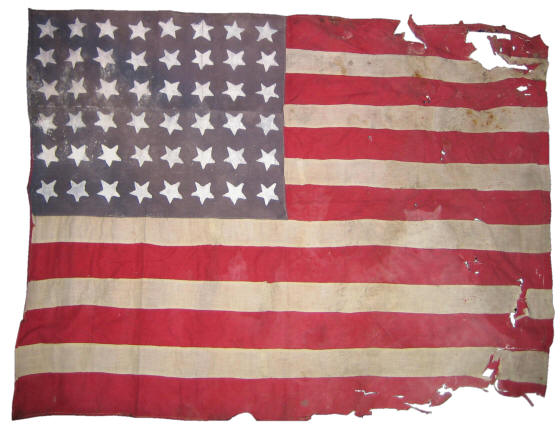 |
48 Stars, Saône,
France.
This homemade flag of 48
stars from Saône , France, is single-sided with
its white stripes sewn atop
a single piece of red
fabric. The stars of
the flag are painted with
white paint. The top
row of stars points to 12
o'clock, but the stars of
all rows below it point to
the 11 o'clock position.
Allied armies liberated the
Haute-Saône area of France
between September 9, 1944
and November 25, 1944. |
|
|
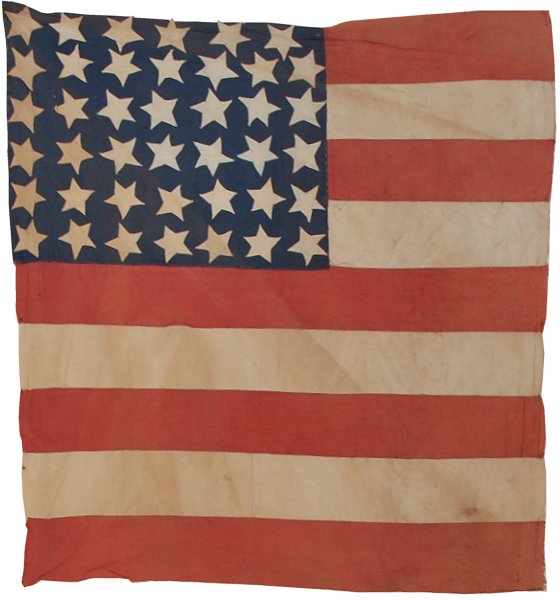 |
41 Stars and 9 Stripes, Saône,
France.
This flag of 41 stars was
located, along with the 48
star flag listed immediately
above, in Saône, France. It
has exceptional folk
qualities, including an
unusual and rare star count,
single-applique stars, just
nine stripes of uneven
sizes, squarish proportions,
hand stitching throughout
and a canton that rests on
the red
"blood" stripe.
Click
here to read more about
this flag. Allied
armies liberated the Haute-Saône
area of France between
September 9, 1944 and
November 25, 1944. |
|
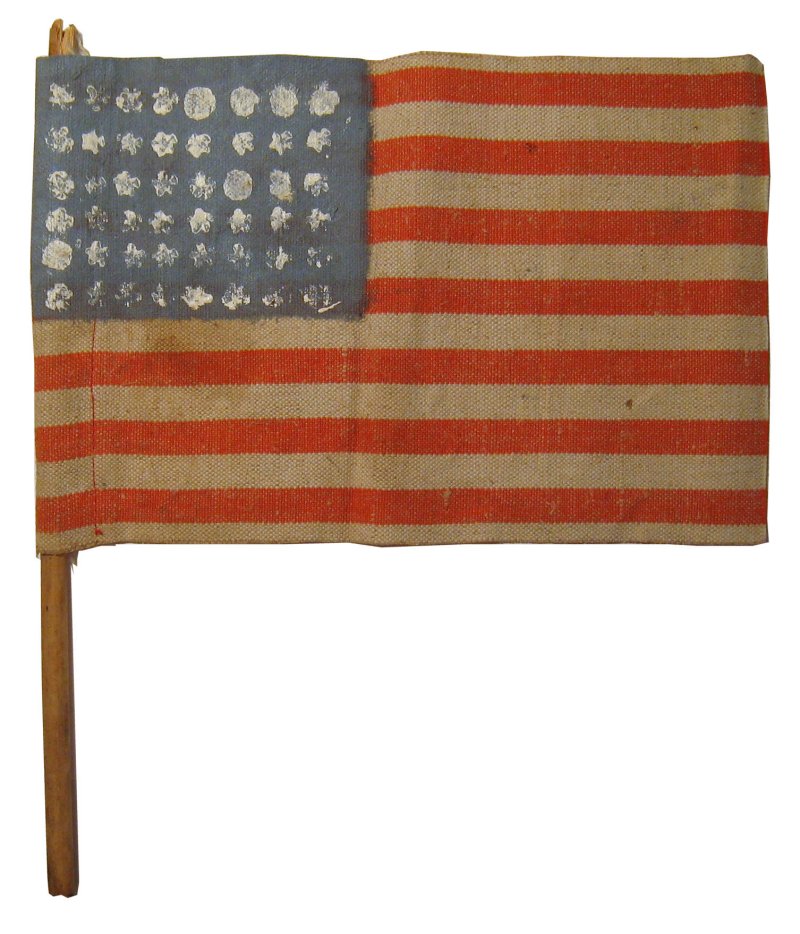 |
48 Stars, Calais,
France.
This small flag of 48
Stars was found near Calais,
France. It is single-sided and made from a single red
and white striped
piece of upholstery fabric.
The parade flag
features a blue oil-based
paint canton with white
pressed stars. The
maker affixed the flag to a
broken wooden dowel and
press-painted the white
stars, some of which are
completely circular from an
excess of paint.
Allied armies liberated
Calais, France on September
28, 1944. |
|
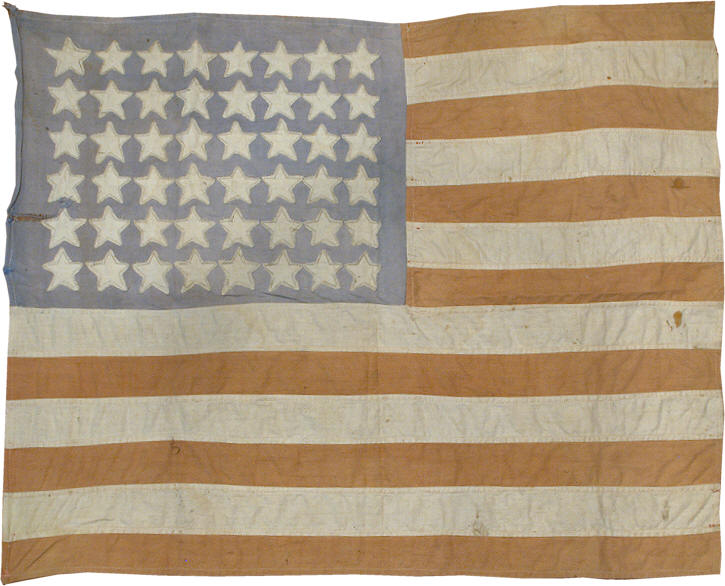 |
48 Stars, Charleroi,
Belgium.
This is the first liberation
flag that I've encountered
that was made in Belgium.
The flag is made of cotton
and is entirely machine
stitched. Its 48 stars
and 13 stripes are
historically accurate for
the period. The 48
stars on each side are hand
cut and sewn back to back,
in double appliqué
construction, using a lineal
stitch. The flag is
relatively small, being less
than 2 feet long,
demonstrating the experience
of the seamstress is
evident. Allied armies
liberated Charleroi, France on
September 3, 1944. |
|
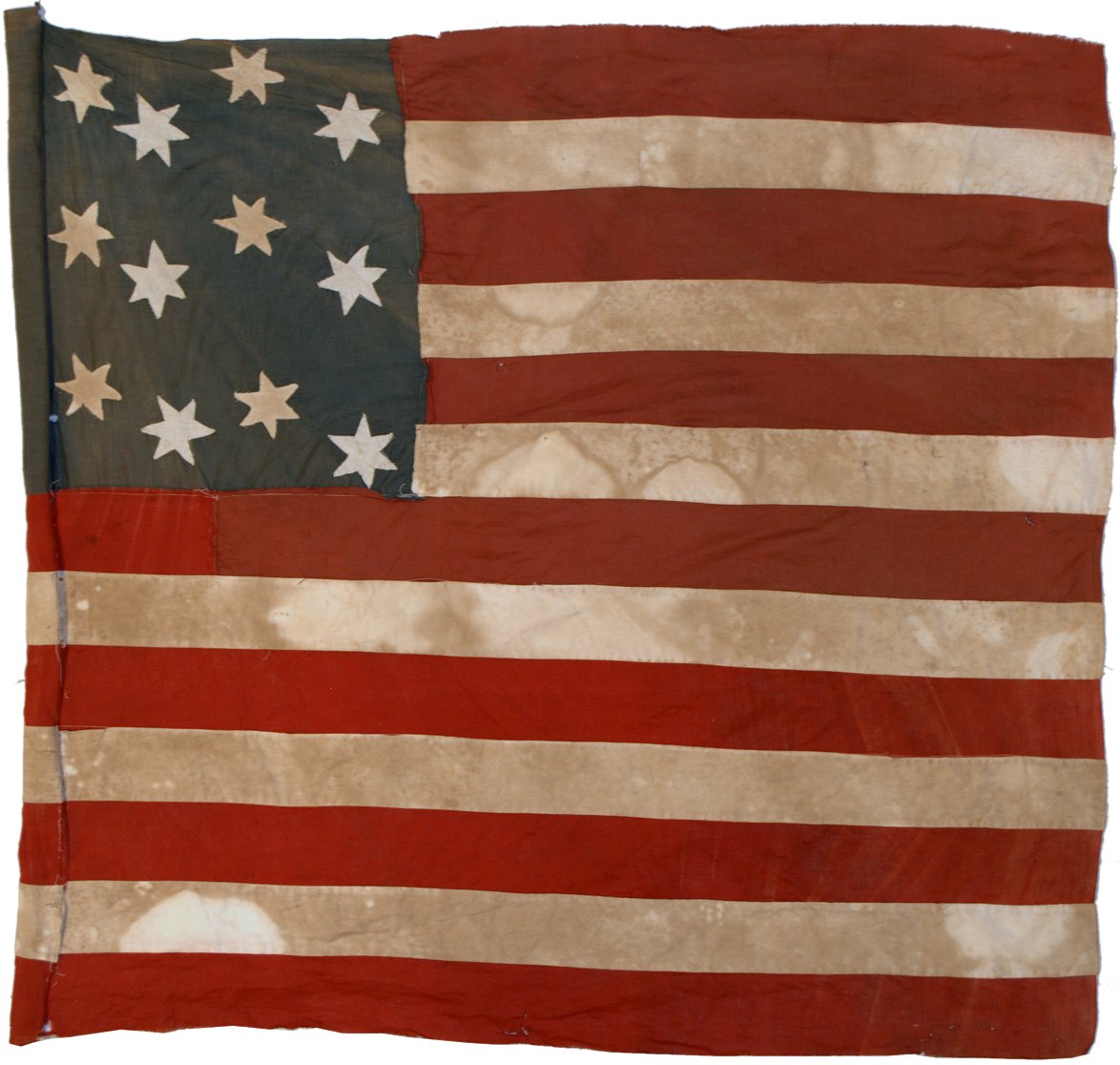 |
12
Stars, Baccarat,
Lorraine, France.
This beautiful liberation
flag features just 12 stars,
each having six points.
The canton of the flag rests
on the red war stripe, and
the columns and rows of the
flag are staggered, giving
it a unique twinkling
effect. The flag is
made of pieced cotton
fabric. |
|
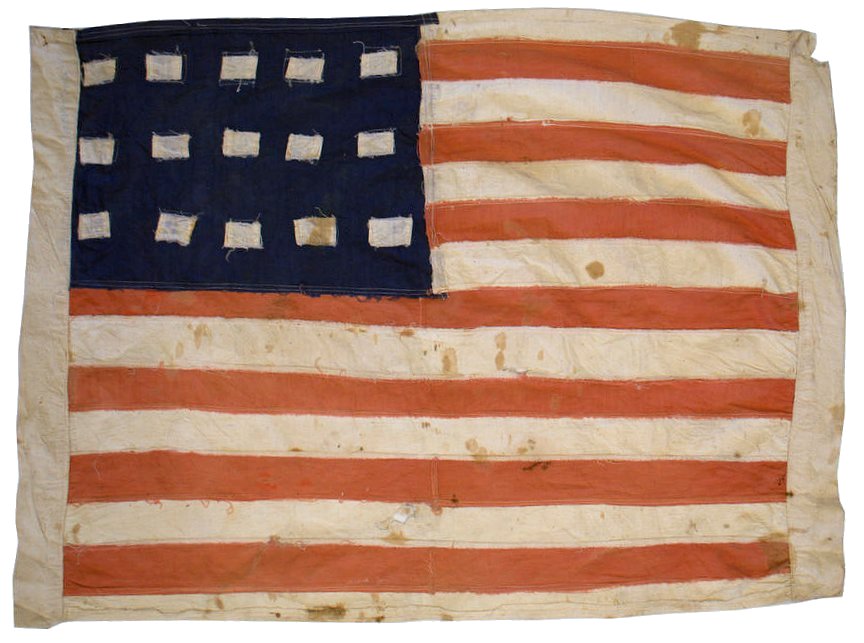 |
15 Stars, Pacific Theater.
Of the few liberation flags
that I'm aware of, this is
the only I've ever
encountered from the Pacific
Theater. Returned from
Japan at the end of World
War II in the footlocker of
Mr. Martin Moder of House
Springs, Missouri, the flag
remained in Martin's
footlocker in a barn in
House Springs for more than
50 years until it was
removed for safe keeping by
his family in 1998.
The whimsical rectangular
stars, unusual star and
stripe counts, machine
stitching, and the fact that
the reverse side is the
finished side of the flag,
are all indications that
this flag was made by
foreign hands--a person
familiar with the American
flag in style but not in
detail-as a liberation flag.
Most likely, Martin acquired
the flag in the Philippines
or another location where
Americans liberated the
population from the
Japanese. An
extraordinarily rare flag of
unique style and form. |
|
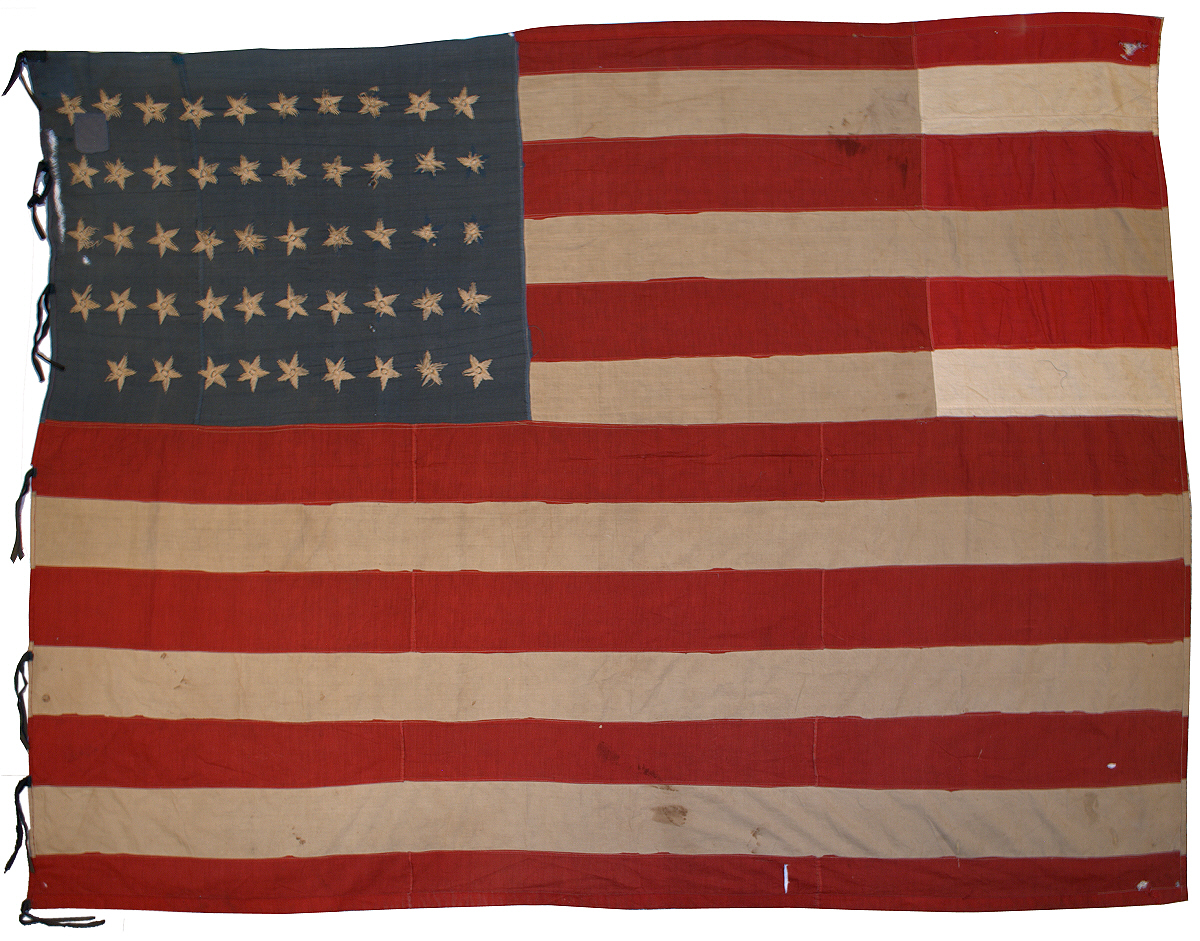 |
49 Stars, Saint Samsom de
Bonfosse, Normandy, France.
This large homemade flag
features 49 hand embroidered
stars sewn from a relatively
thick string, rather than a
thin thread. The
design of its embroidered
stars is unique in my
experience and the result is
an almost floral appearance
to each star. The flag
also has sewn ties along its
hoist, a trait often seen on
flags made for military use.
The canton of the flag sits
on the red war stripe, yet
another rare trait in an
American flag. |
|
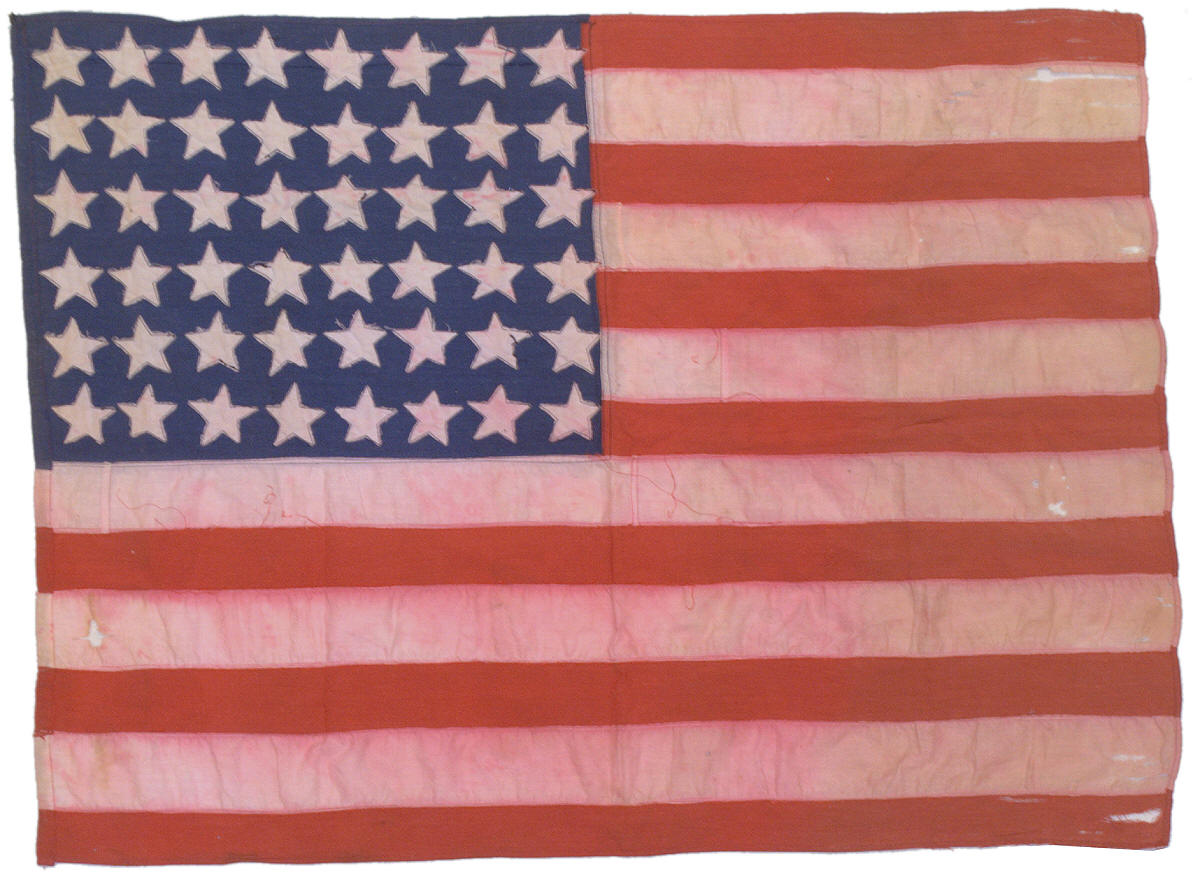 |
48 Stars, Lorraine, France.
This liberation flag from
the Lorraine region of
France has 48 stars sewn
with a blue thread.
The red fabric used for the
stripes was not color-fast,
and exposure to the elements
caused the color to bleed,
giving the flag a pinkish
hue. |
|
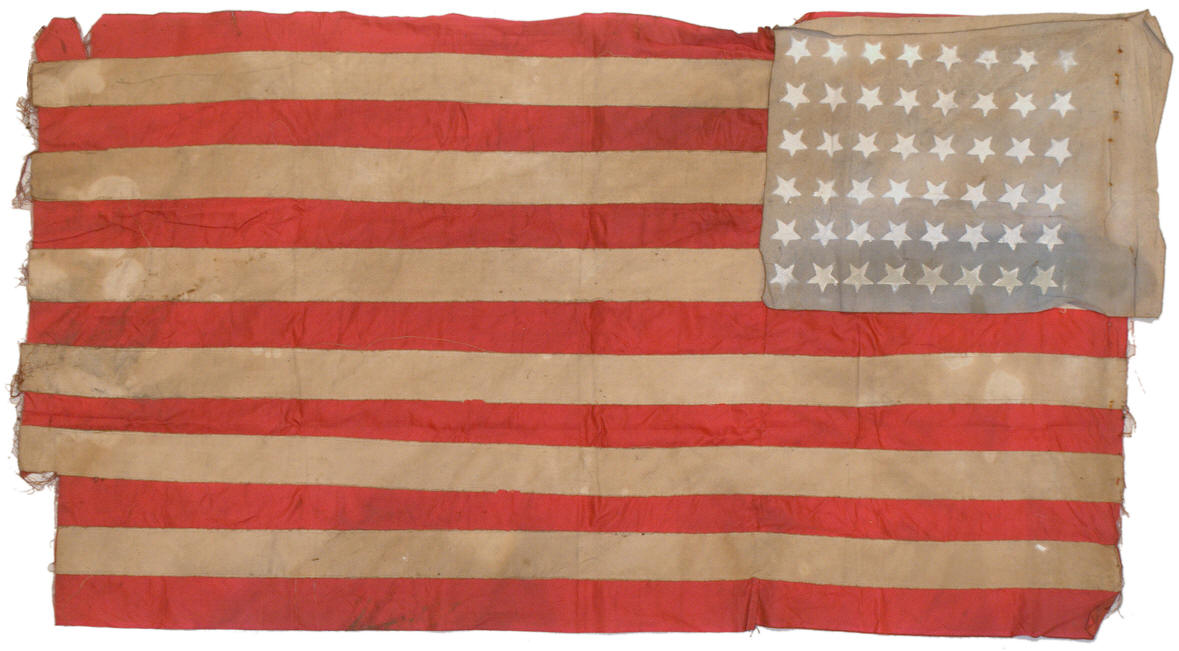 |
48 Stars, Flammerans, France.
This hastily made liberation
flag has a canton that is
barely hanging onto the body
of the flag. The stars
are painted in white, and
the flag itself is
single-sided, with the white
stripes sewn onto a single
piece of red fabric.
Remnants of rusted tack
holes can be seen along the
hoist end of the flag.
Note that the canton rests
on the red war stripe. |
|
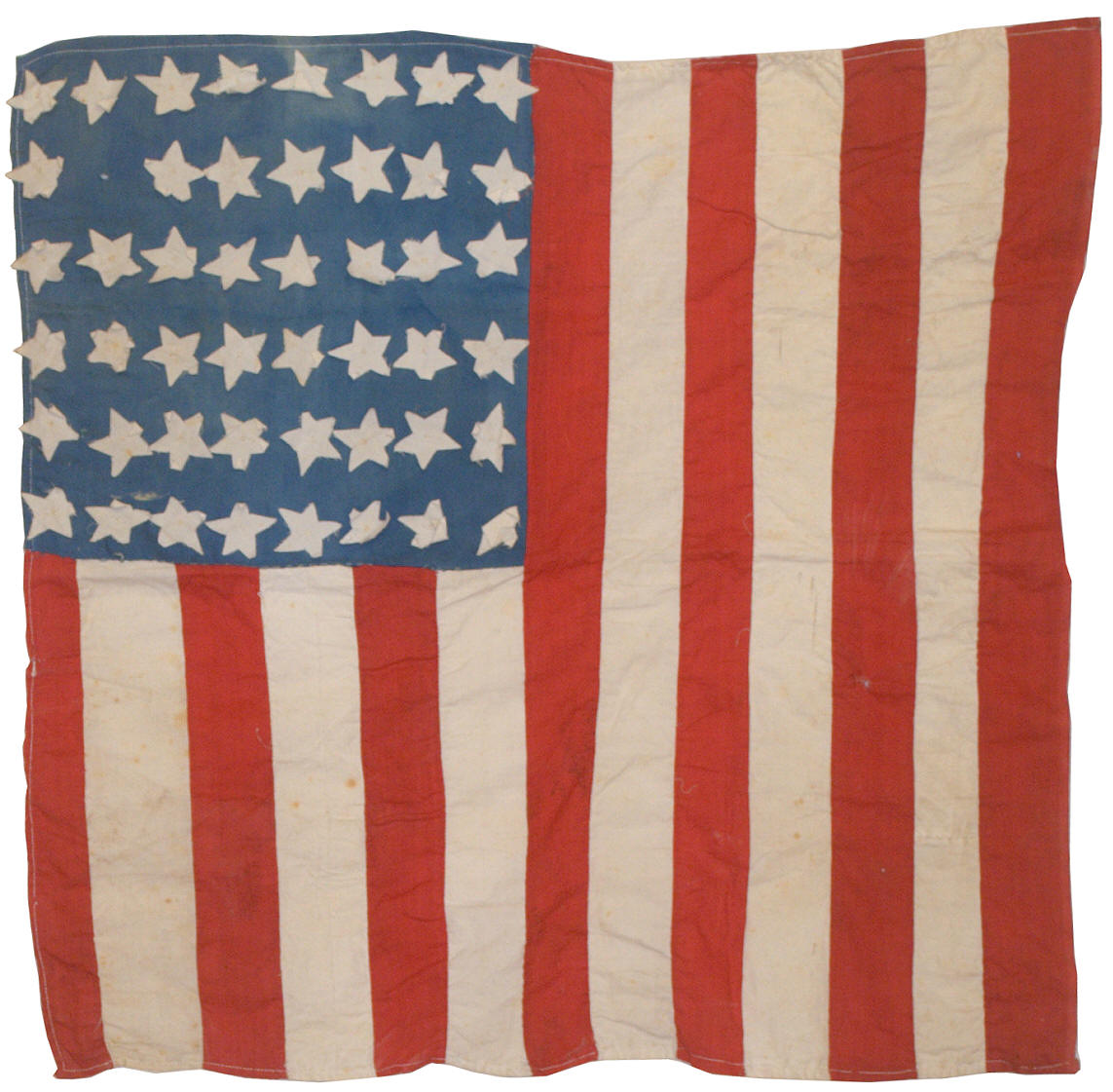 |
48 Stars, Franche-Comte, France.
Single-sided and with cotton
stars affixed only by
stitches in the center of
each star, this flag of 48
stars was made in the
Franche-Comte region of
France in the eastern part
of the country, near the
German border. The
canton of the flag rests on
the red war stripe of the
flag. |
|
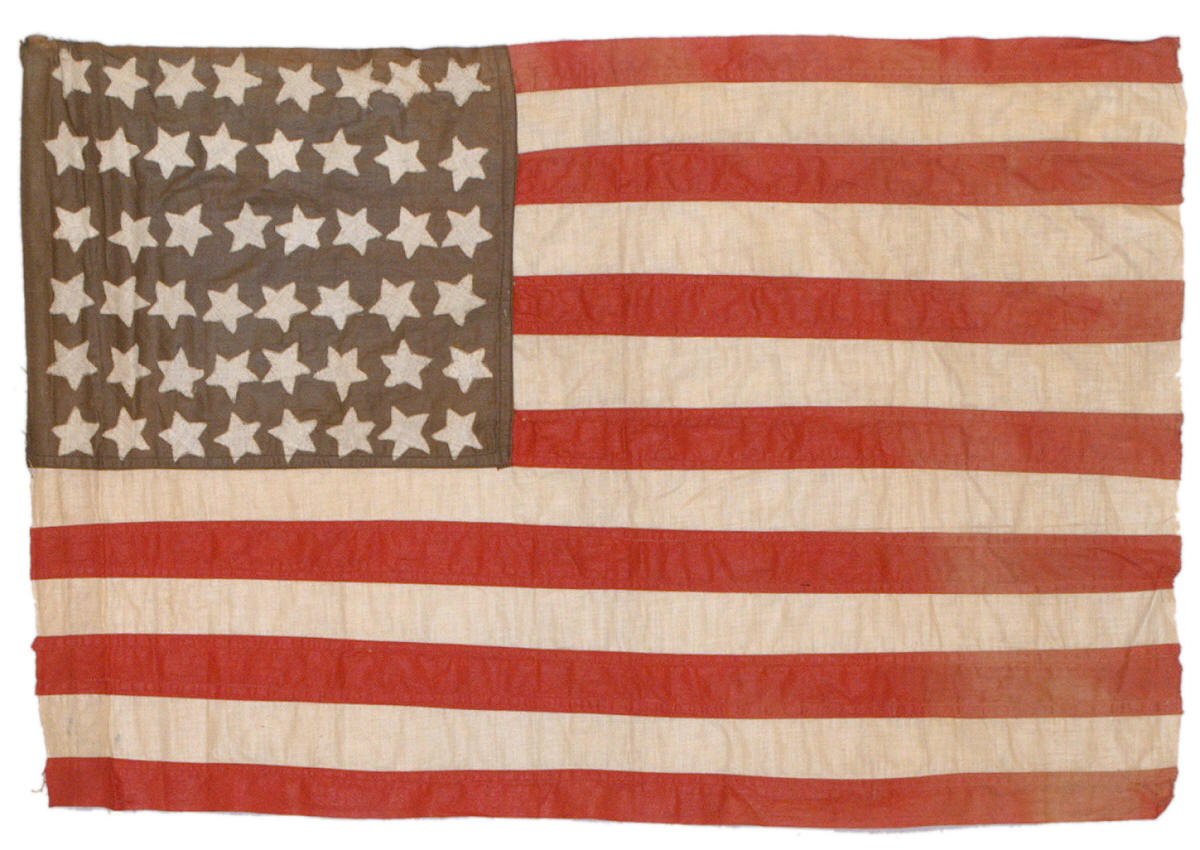 |
48 Stars, European Theater,
World War II.
Though the specific history
of this liberation flag has
been lost, it was first
acquired from the estate of
a World War II veteran.
Its construction is
consistent with liberation
flags from the European
theater of World War II,
likely France.
American veterans of the war
were given flags by admiring
crowds as they passed
through France on their way
to Germany, and some of
these were kept by American
GI's and brought home, where
they occasionally surface
along with other mementos of
the war in their personal
belongings. |
|
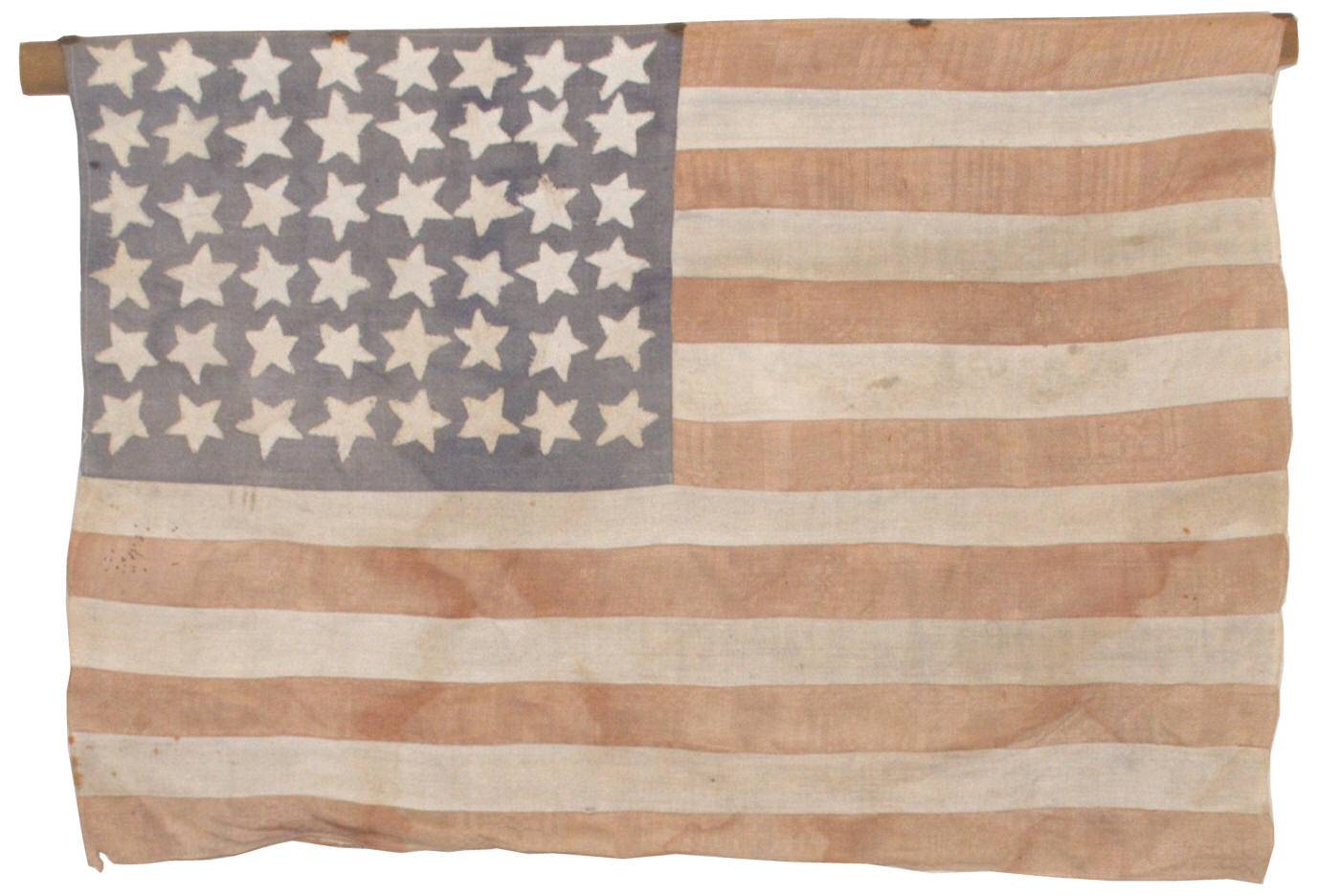 |
48 Stars, Mâcon /Saône-et-Loire,
France. This faded
48 star flag features
whimsical hand cut flags
that are glued onto the
canton. The red fabric
of the flag is made of an
unusual brocade patterned
fabric and was likely some
sort of fabric used for
drapes or other home goods.
The flag is still attached
by tacks to its original
wooden half-dowel from which
it originally hung. |
|
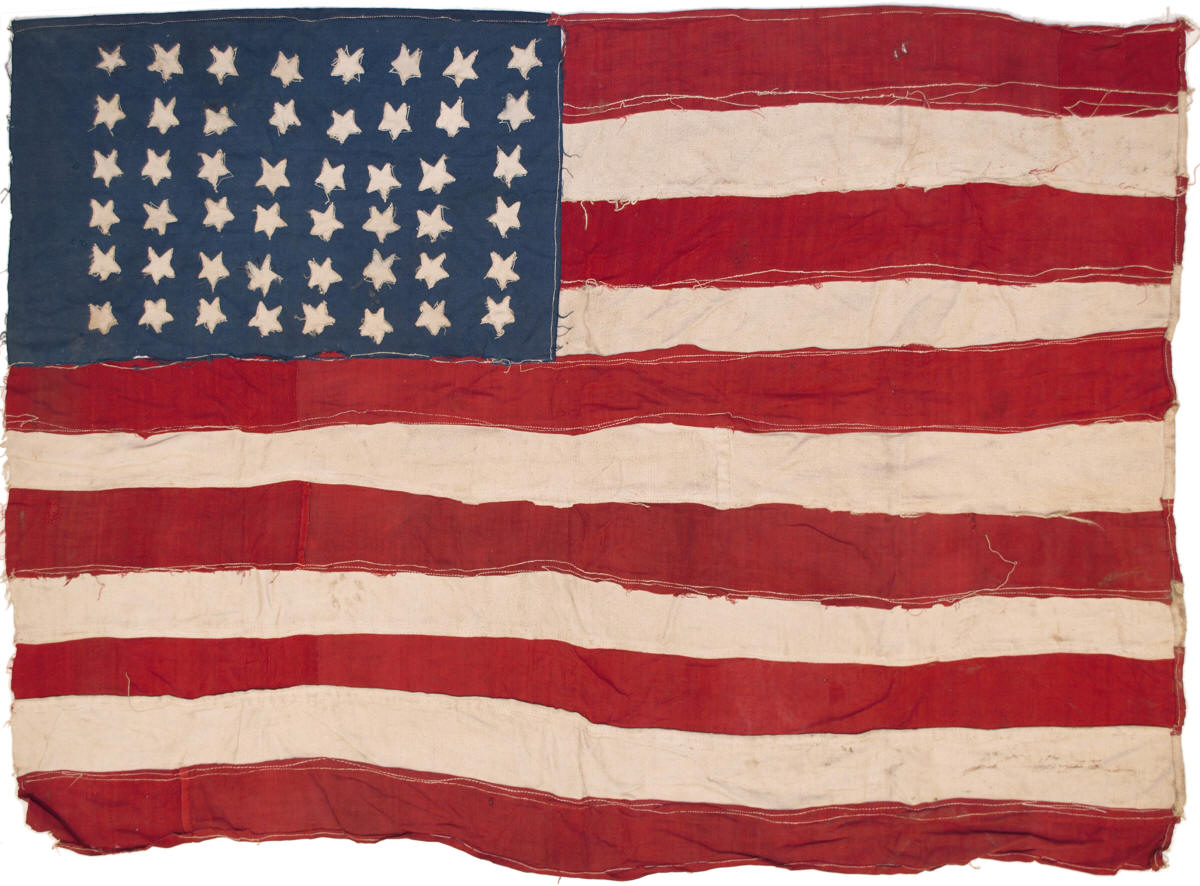 |
48 Stars, Vicq-sur-Nahon,
Indre,
France. The person
who originally acquired this
charming flag purchased it
from the family of its
original owner. "I bought
this flag in a very small
village called
Vicq-sur-Nahon which is in
the French Department called
the Indre. It had been found
in the house of an old lady
who had died. The person I
bought it from (her grandson
I think) called it her
Liberation flag." |
|
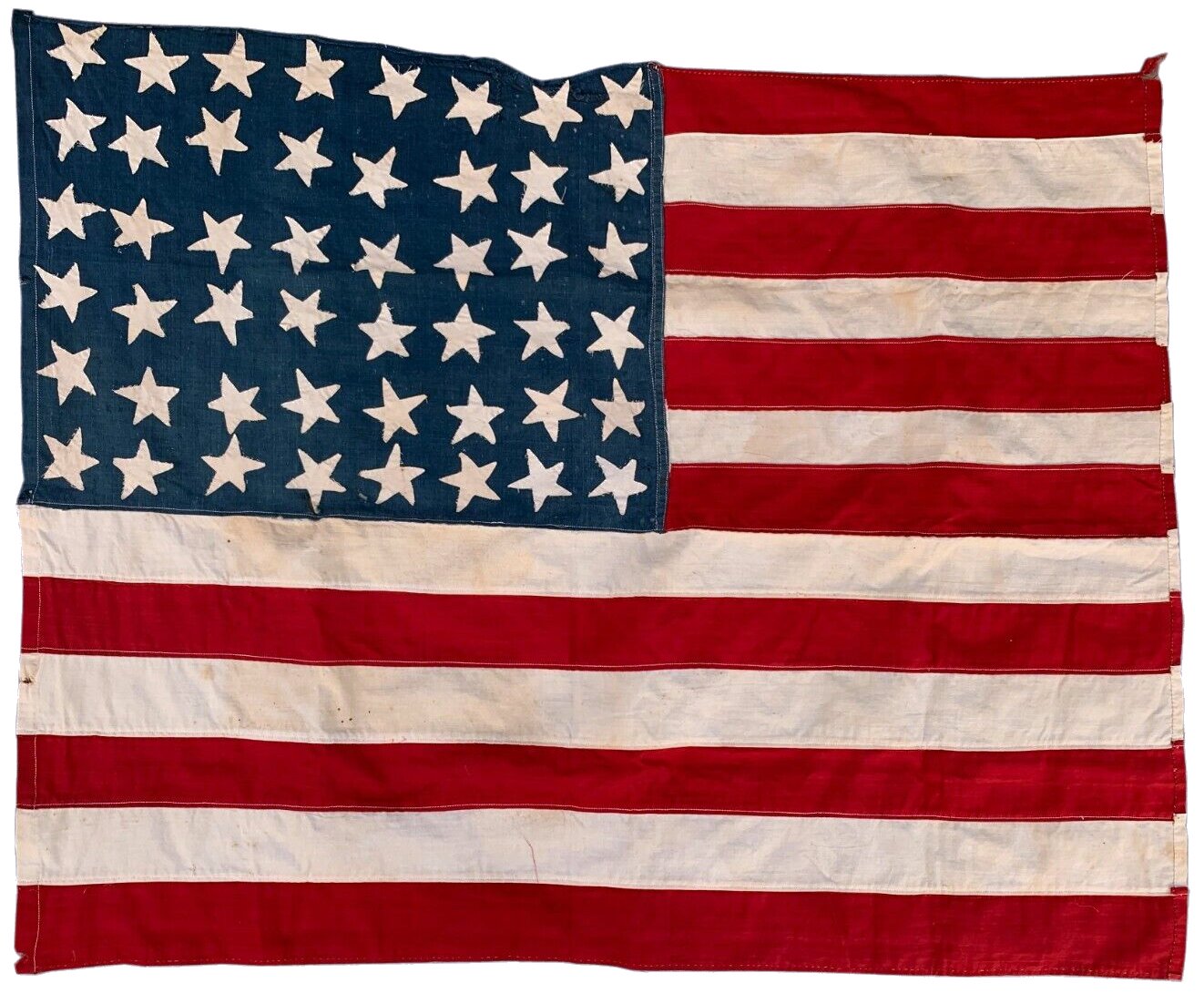 |
48 Stars, Châteauroux,
France. This flag has 48 hastily hand sewn
stars and a combination of machine stitching for
the stripes and hand stitching to secure the fly end and
selvedge. Made of light cotton and previously tacked to
a staff, its whimsical stars rotate across
the canton. |
|
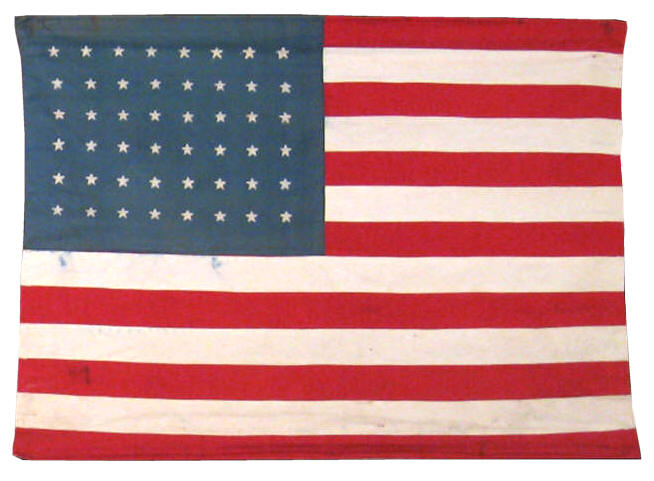
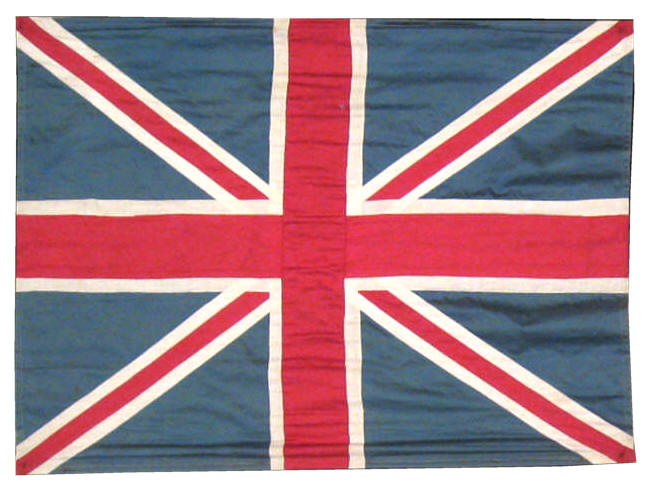
48 Stars American Flag
and British Union Jack,
Orléans, France.
This 48 Star American Flag
and British Union Jack are a
rare matched pair of
liberation flags found in
Orléans, France. Both
flags are constructed of
similar polished cotton
fabric. The white
stars of the American flag
are painted. Both are
single-sided, and both
designed to be hung as
banners. They are tacked
with brad tacks to a wooden
rail on the top and a
painted piece of wood trim
on the bottom. On the top
rail, U tacks are hammered
into the corners for hanging.
Allied forces liberated
Orléans, France in August,
1944. |
|
|
|
|
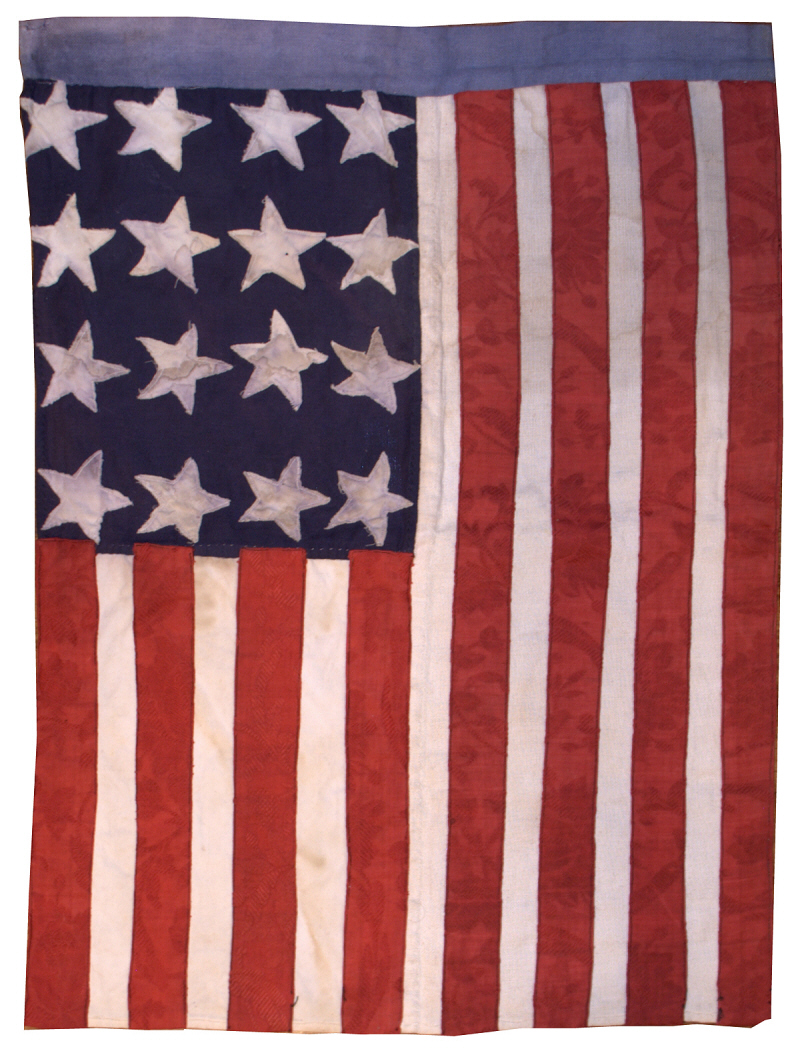
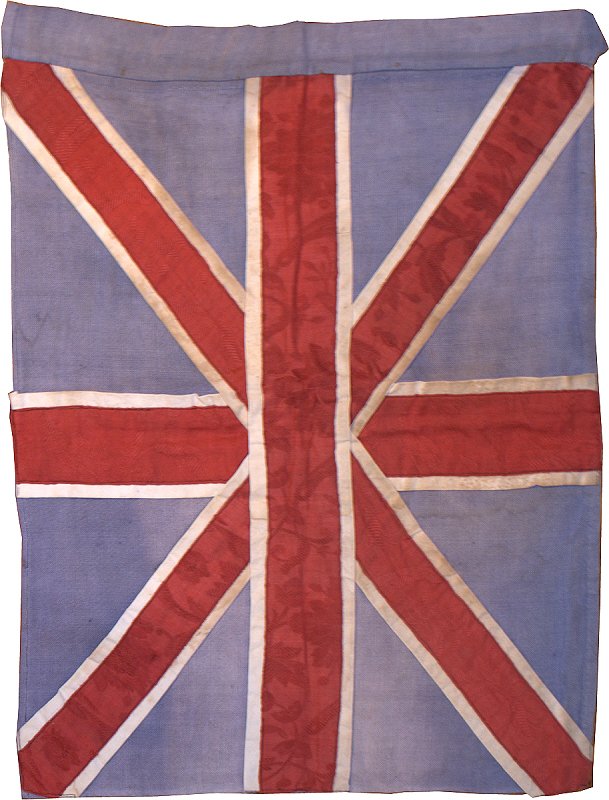
16
Stars and 15 Stripes, St.
Aubin De Blaye, Bordeaux,
France.
This single-sided liberation
flag features sixteen bold
stars and fifteen stripes of
various widths. The
fabric used for the red
stripes of the flag is
floral brocade. The
use of patterned fabrics to
make the stripes of American
flags is extremely rare.
I am aware of only one other
American flag with this
unusual trait. This
particular flag also has a
mate, a British Union Jack,
also made with the same
brocade patterned red
fabric. |
|
  |
|
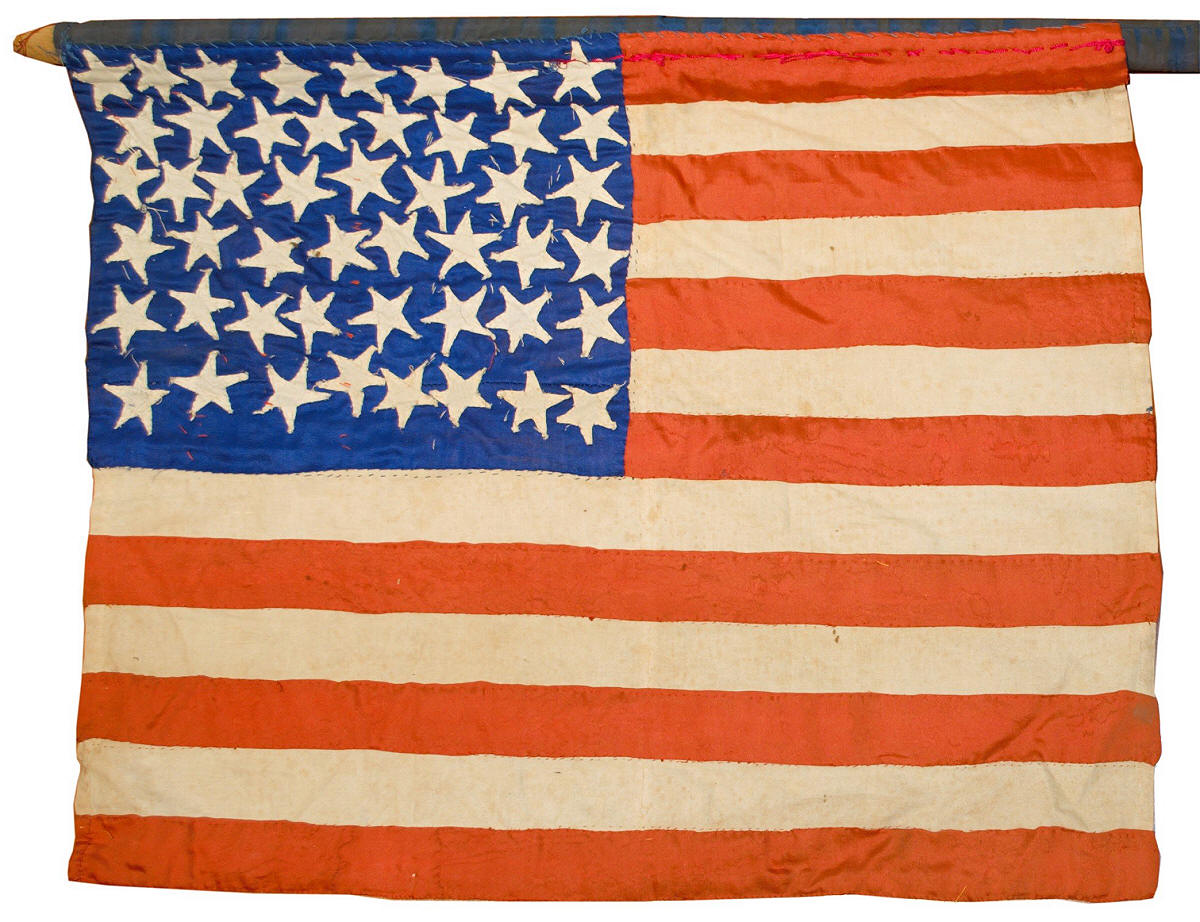
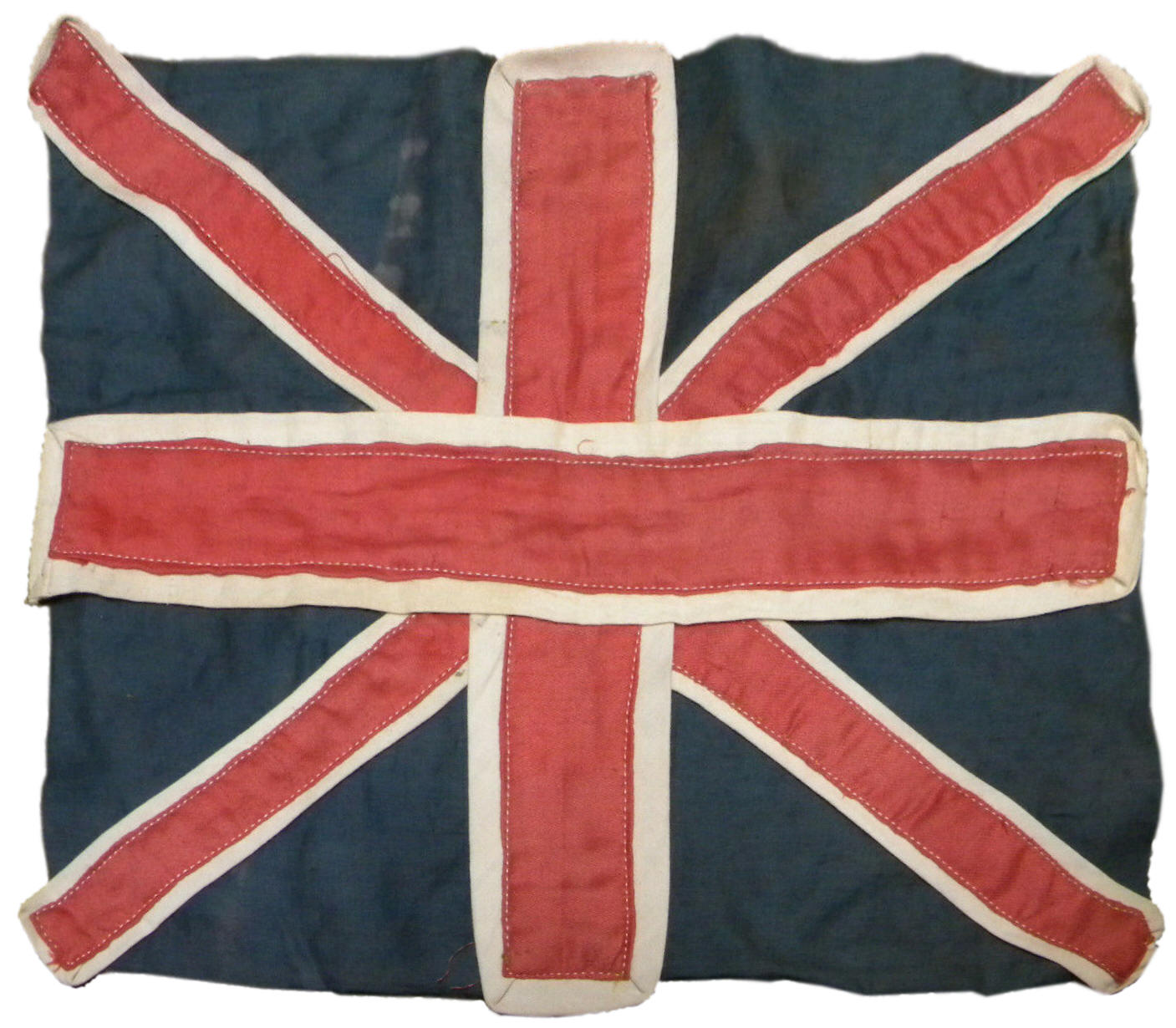
48
Stars.
Made of a silk and cotton,
this pair of flags was
affixed to their staffs in
such a way that they were
intended to be mounted or
held with the staffs
horizontally. Entirely hand
sewn, the jumble of stars
presents a jubilant
twinkling effect on the
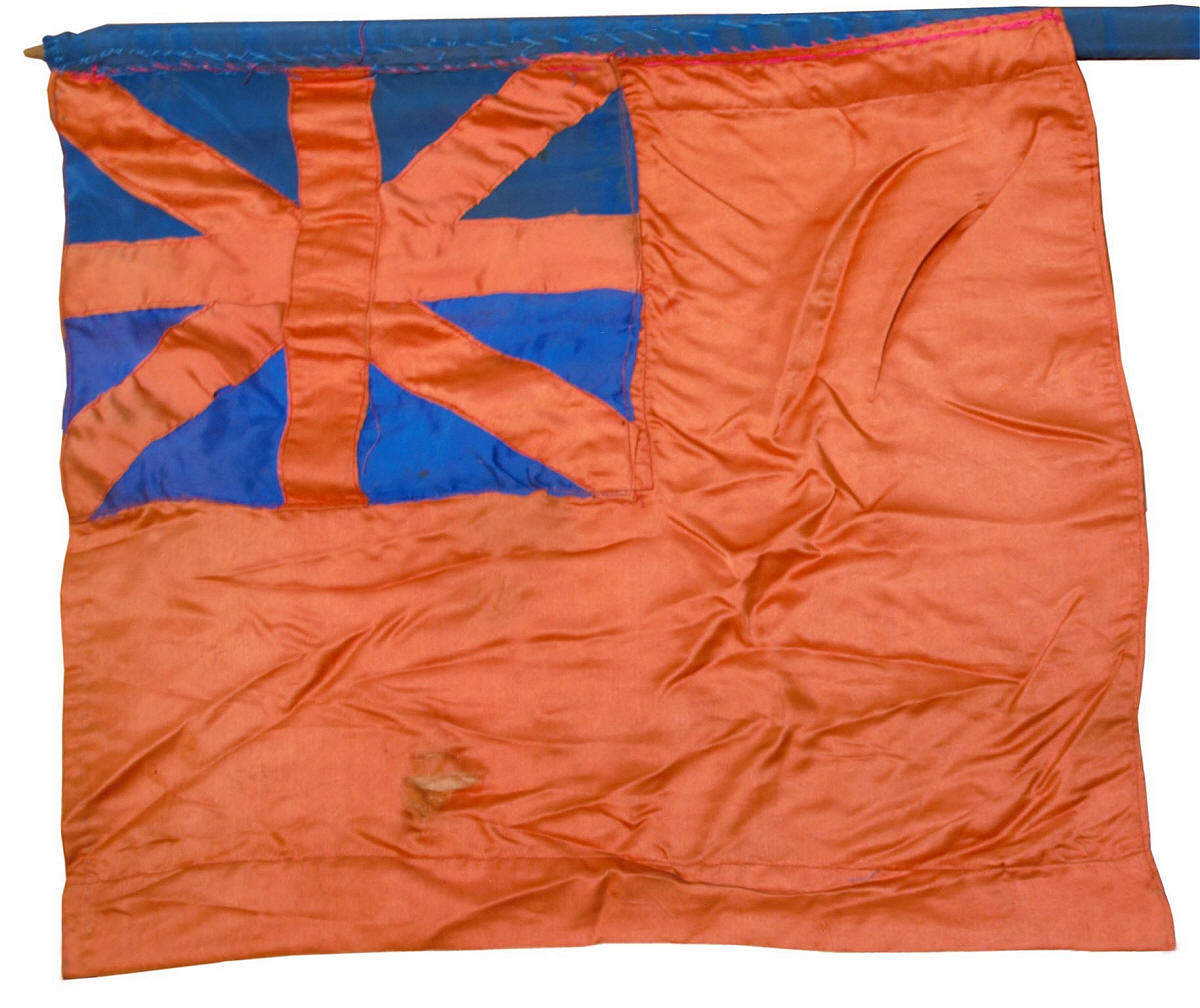
canton. The British
companion flag, also
entirely hand sewn, is a
wonderful variant of the
British Red Ensign, which is
typically used on merchant
ships. Part of the British
Merchant Navy, merchant
ships ferried supplies and
supported logistical
activities during the
invasion and liberation of
France, and would have been
visible in the ports along
Normandy supporting the
supply mission for Allied
forces. |
|
  |
|
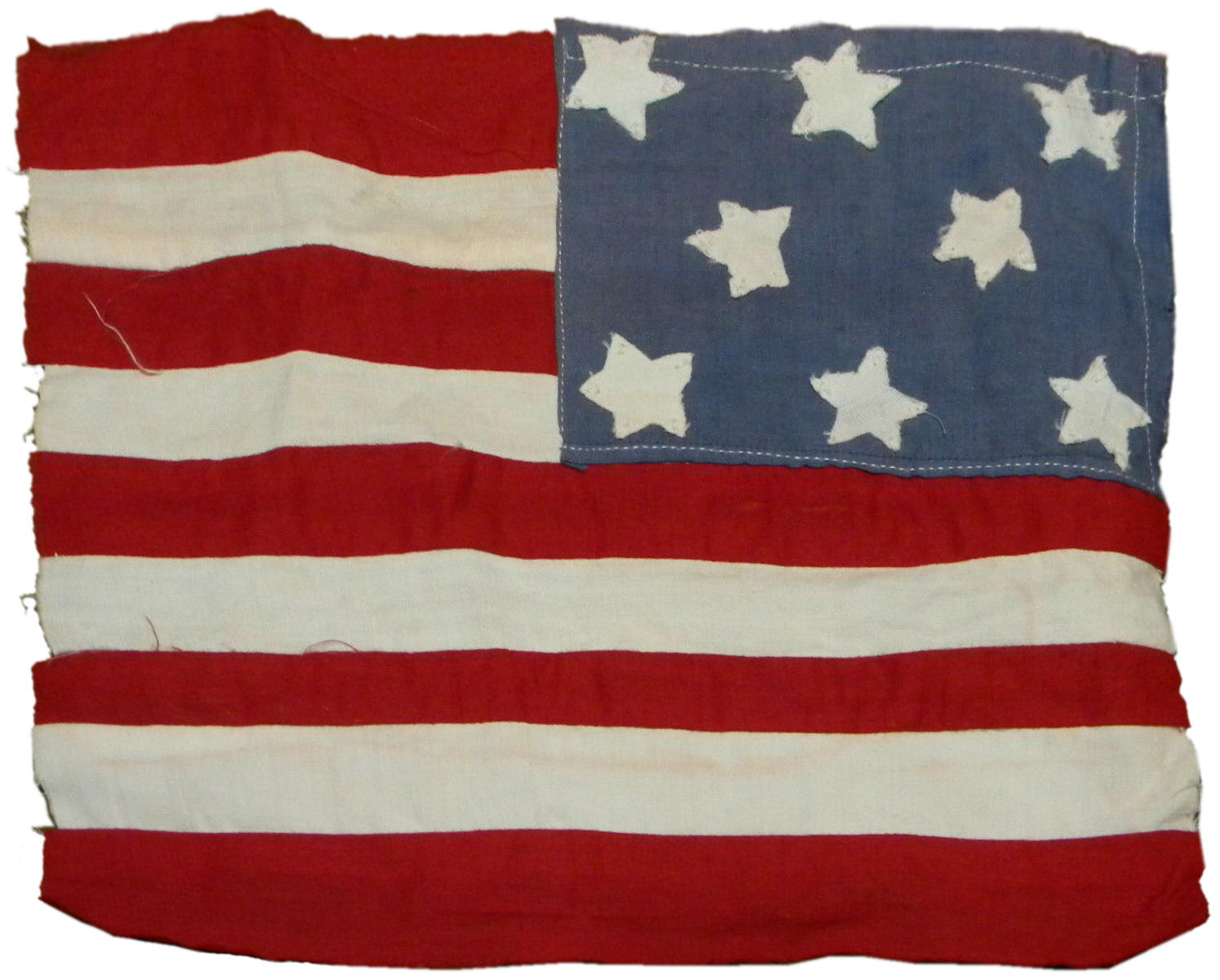
8
Stars and 9 Stripes,
Attributed as a pair of
World War I Liberation
Flags, Châtellerault, France.
The French seller of this
pair of flags attributed the
flags as being World War I
era, but it is difficult to
determine if the flags are
from World War I or World
War II. Overall, they are an
attractive pair, made with a
combination of machine
sewing and hand sewing. The
unusual number of stars and
stripes on the American
Flag, and the crudeness of
the Union Jack adds to the
flag's homemade and folksy
charm of the set. "Hello,
the flags come from a small
village near Châtellerault
(86) where Lebel rifles were
made, the wives or mothers
of soldiers made flags with
friends or family for their
village or their
neighborhoods (at the time
very may have had a sewing
machine). These are
practically unique
historical objects, there
was no large series at the
time and above all very few
colored fabrics, there was
black and white, which is
why many WWI flags are
tinted and that with rain
water they rub off on the
white." |
|
|
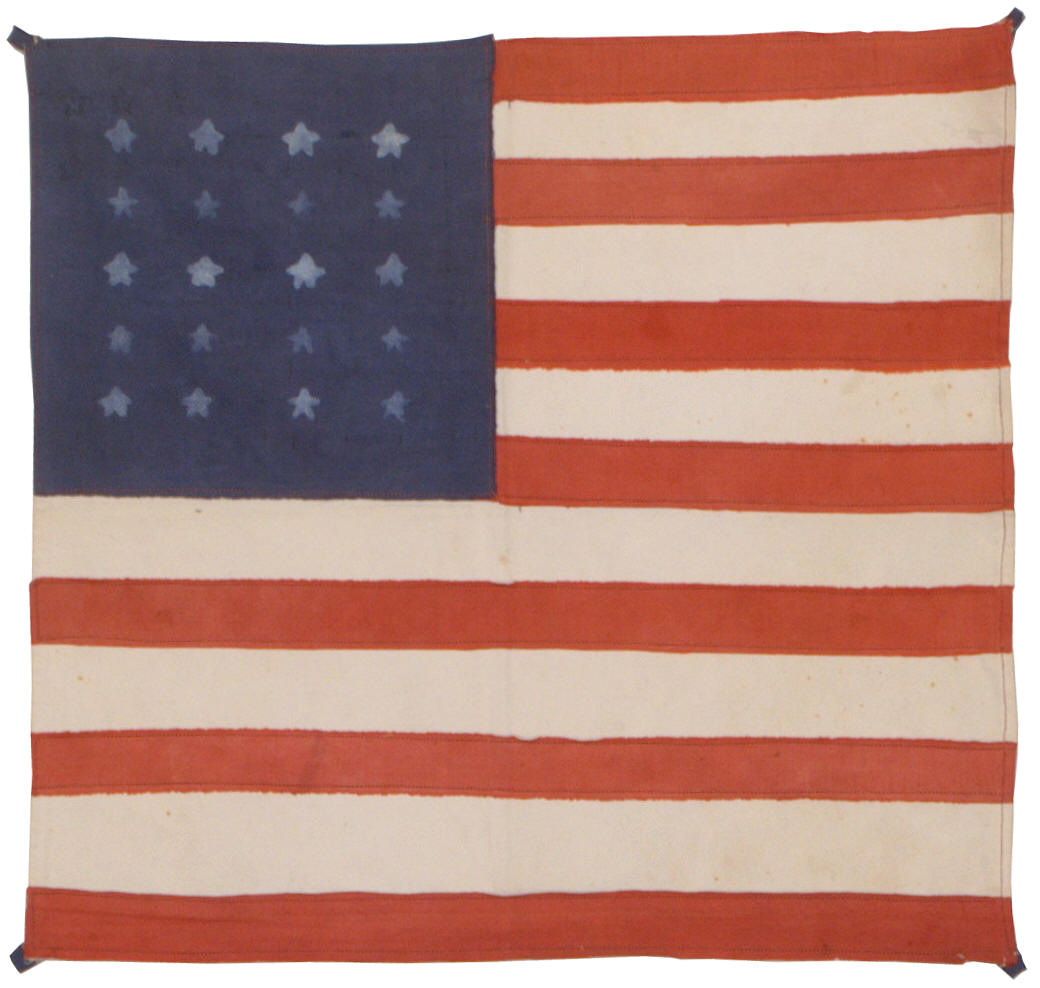 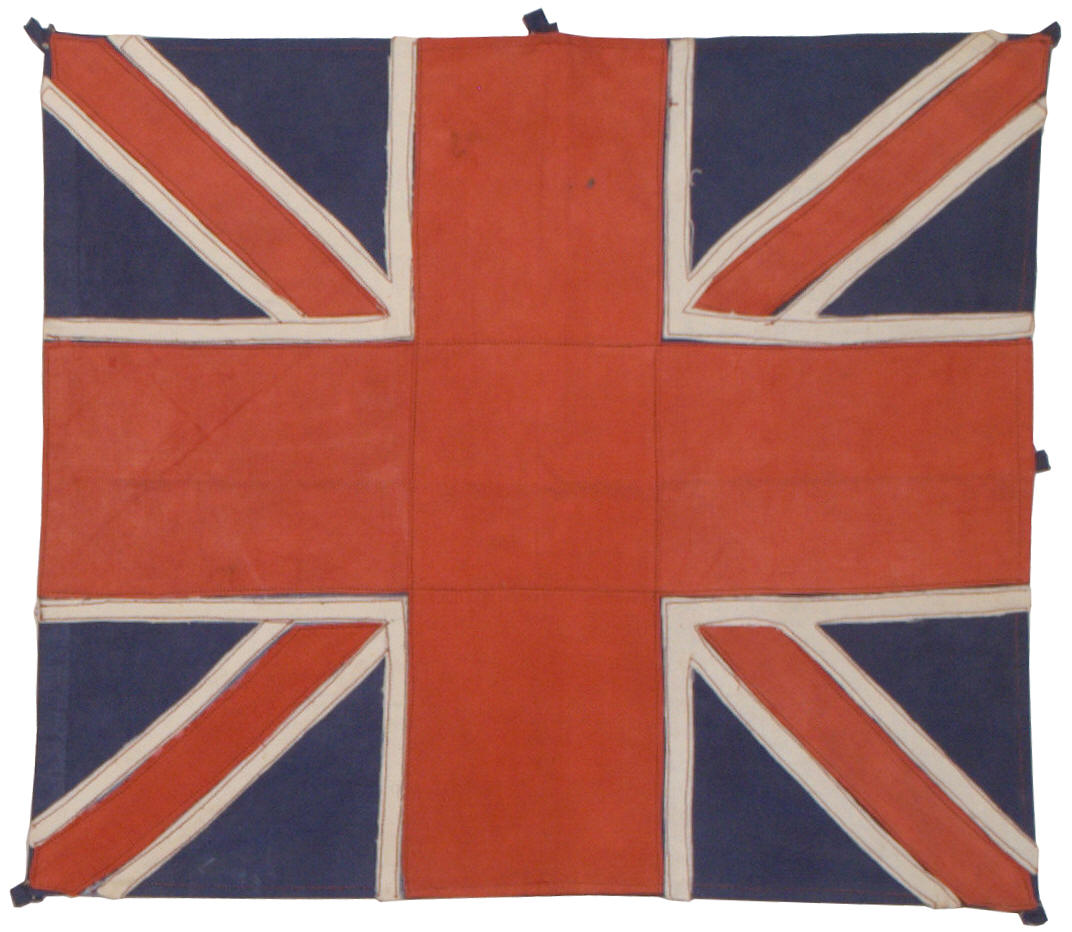
20 Star American Flag and
British Union Jack, Paris,
France.
This grouping was located by
an American in an antiques
shop in Paris. Though
it's unclear where the flags
originated from, they may
well have come from Paris or
the surrounding region.
The stars on the American
flag are painted, and faint
tracings of the star pattern
can still be seen where the
creator of the flags planned
out the pattern. Both
flags are machine sewn, with
small tabs stitched to the
corners for hanging. |
|
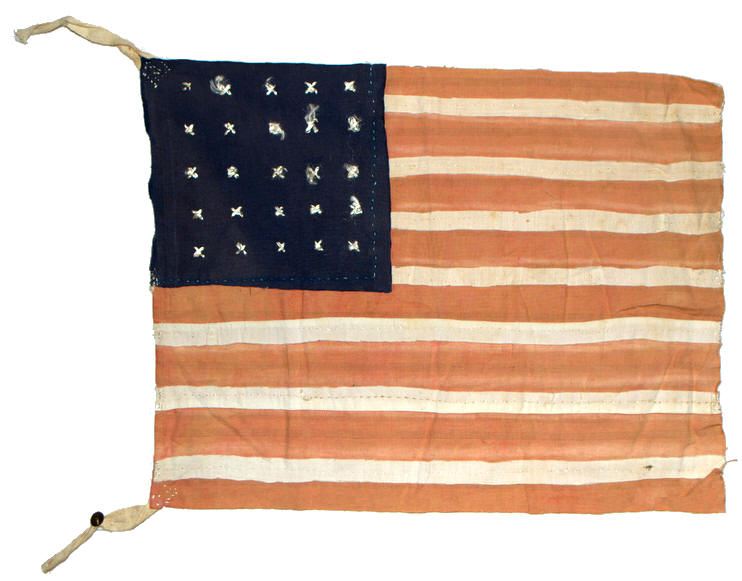 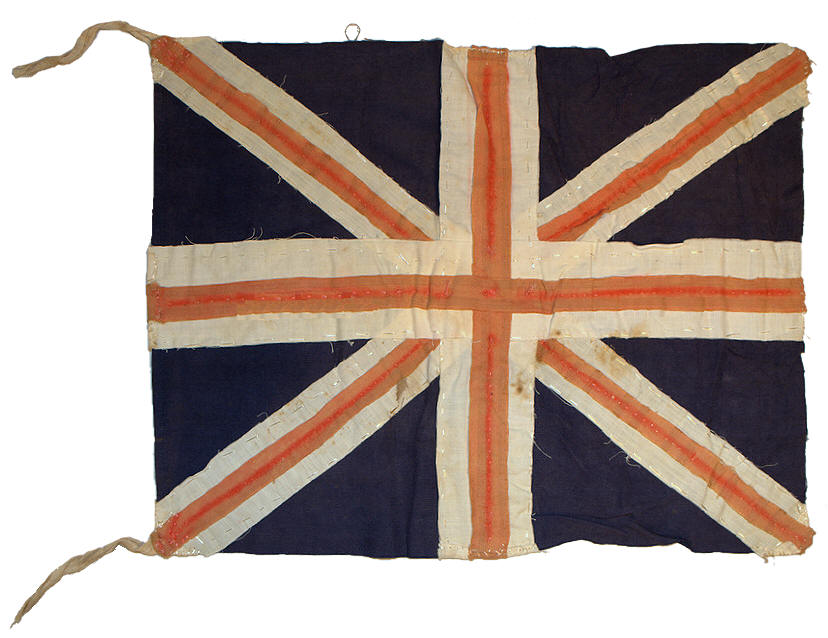 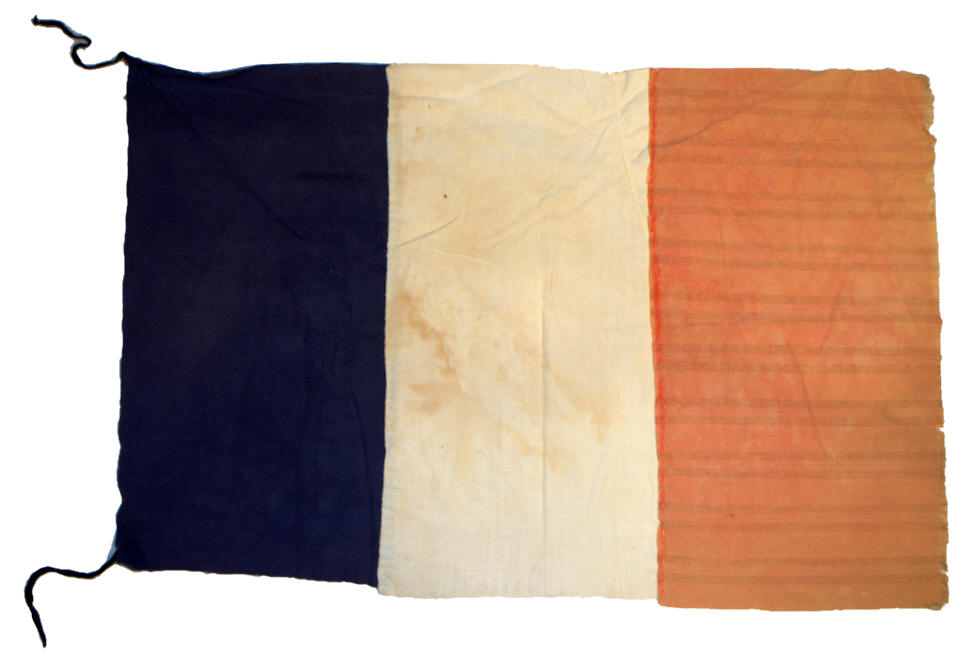
25 Stars and 15 Stripes
American Flag, British Union
Jack and French Tricolor,
Rhone-Alpes, France. These flags were discovered
in the Rhone-Alpes region of
France. All three
flags are made from the same
cotton materials, including
a red fabric with a woven
striped pattern. The
silken thread used to sew
the flags is lustrous, and
the maker accented the red
stripes of the American Flag
and Union Jack with red ink.
The French Tricolor is
slightly larger than the
American Flag and Union
Jack, and a stitched seam
running through the white of
the Tricolor is evidence
that the fabric used was
recycled from perhaps a
dress or some home goods.
The 25 stars of the American
Flag are simple crosshatch
in the shape of an X, and
the canton of the flag sits
on the red "blood stripe".
Allied forces
liberated Lyon, France, the
capital of the Rhone-Alpes
region, on September 3,
1944. |
|
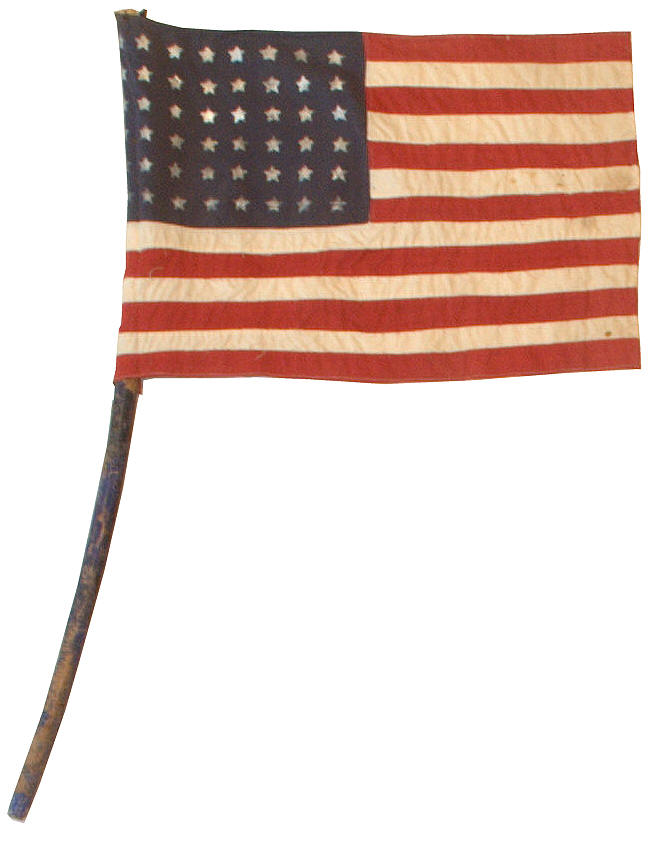 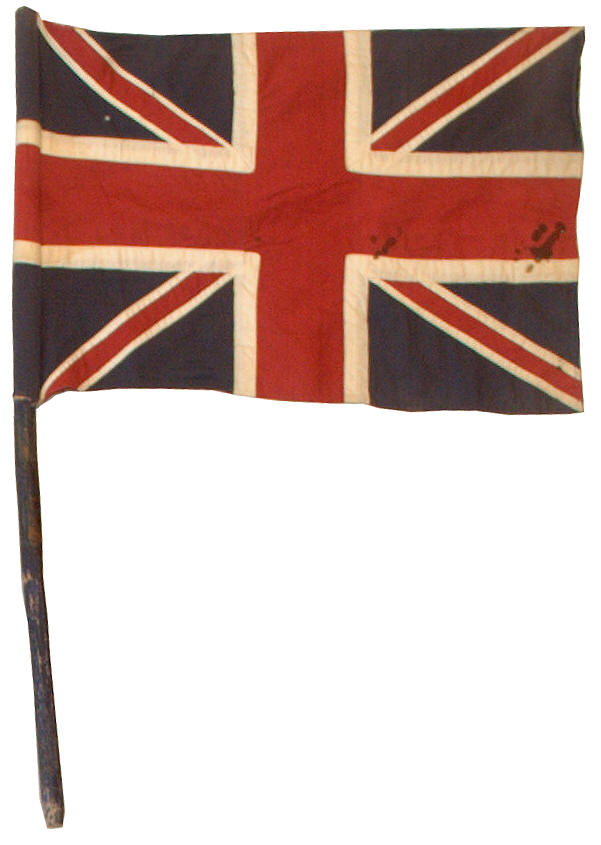 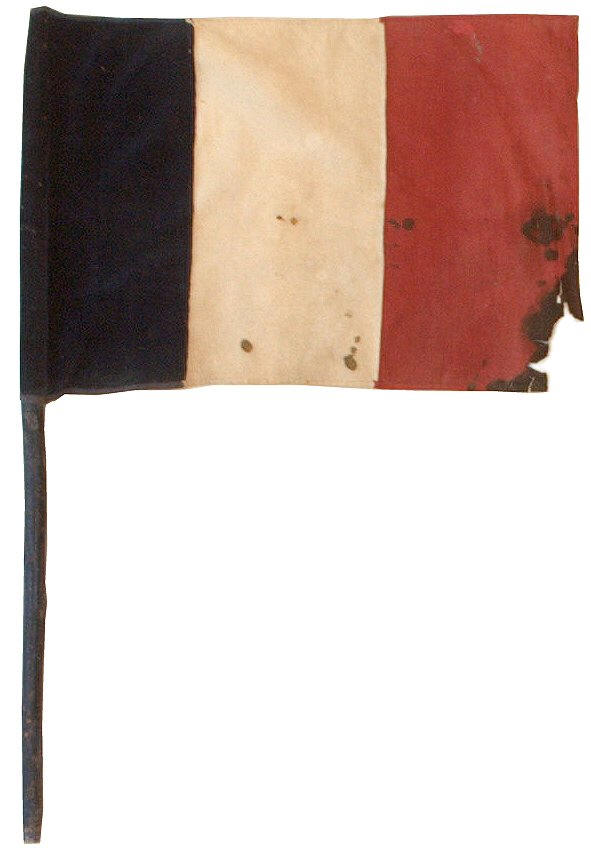 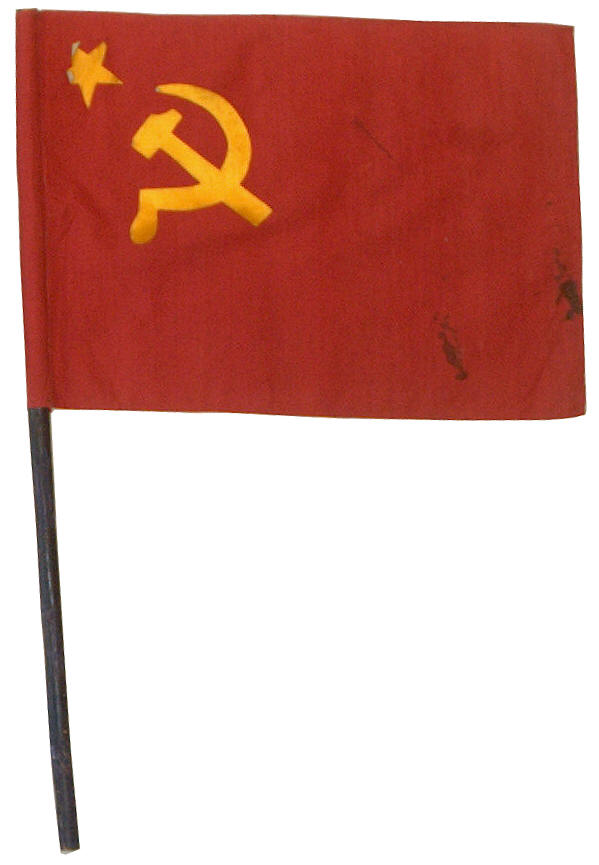
48 Star American Flag,
British Union Jack, French
Tricolor, and Russian Hammer
and Sickle, Set of Four
Liberation Flags, Autrans,
France.
This is the only set of four
allied liberation flags that
I am aware of. The
grouping was made by the
same hand, of the same
fabric, and each of the
flags is affixed to their
own blue painted sticks.
The stars on the American
flag are painted in a silver
metallic paint. The
blue fabric is a velvet
material. The hammer,
sickle and star on the
Russian flag are made of a
reflective material and they
are glued to the red fabric
of the flag. The
grouping, which represents
the four major allies
fighting against the Germans
during World War II, is a
reminder that the world had
not yet understood or
anticipated the future Cold
War that was soon to begin. |
|
 |
|
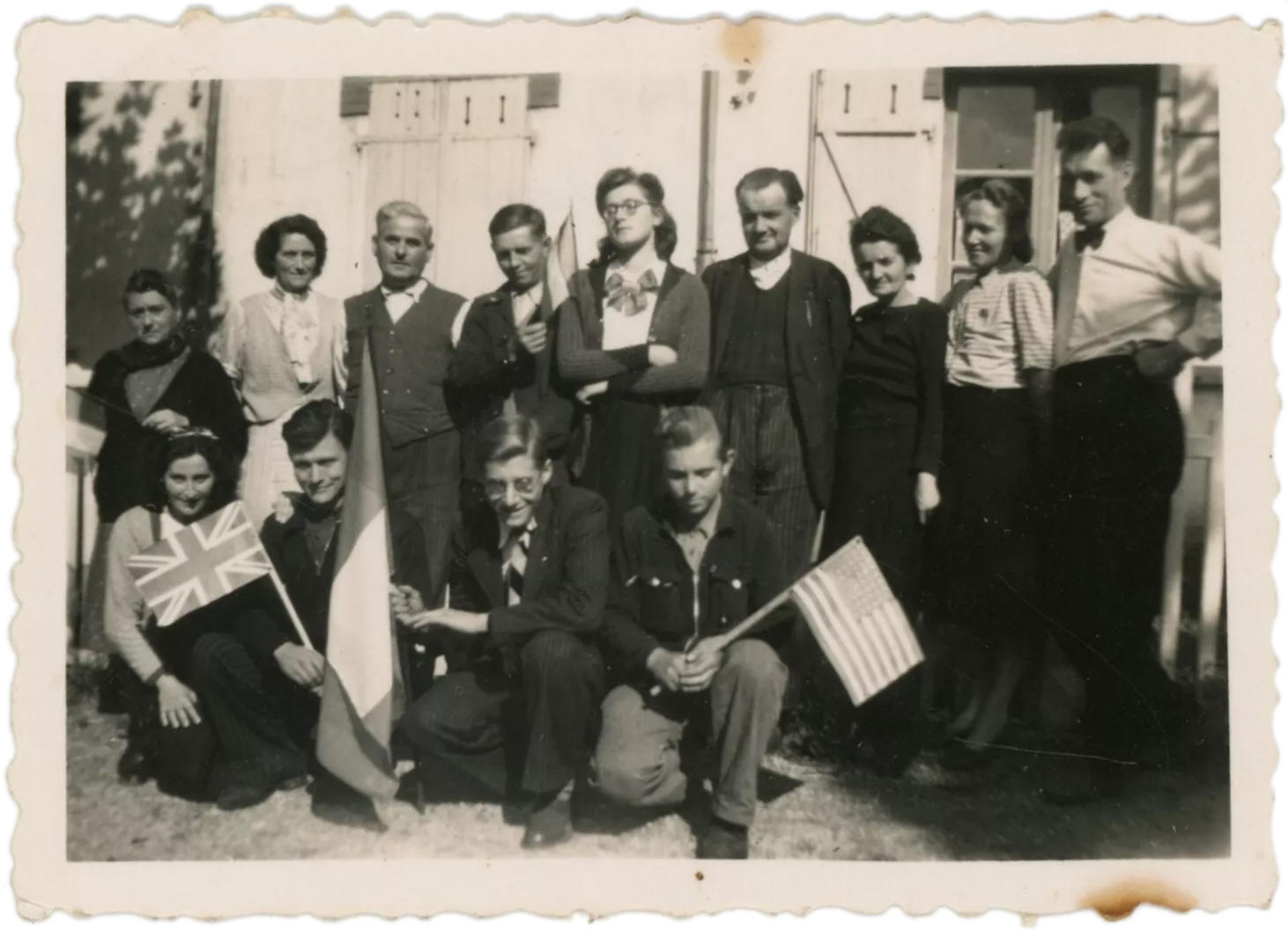
Liberation flags and guarded
smiles after the trauma of
war in this photograph from
Blaineville-sur-Mer,
September 13, 1944. The
handwriting on the back of
the photo memorializes a
poignant counterpoint of
optimism to the death and
destruction of the war.
Libération
13 Sept. 1944 à Blainville
Paulette enceinte de Yves,
venue(?) 22 Novembre
Liberation 13 Sept. 1944 at
Blainville
Paulette pregnant by Yves,
gave birth 22 November |
|
 |
Next:
Son In Service |
 |
|
|